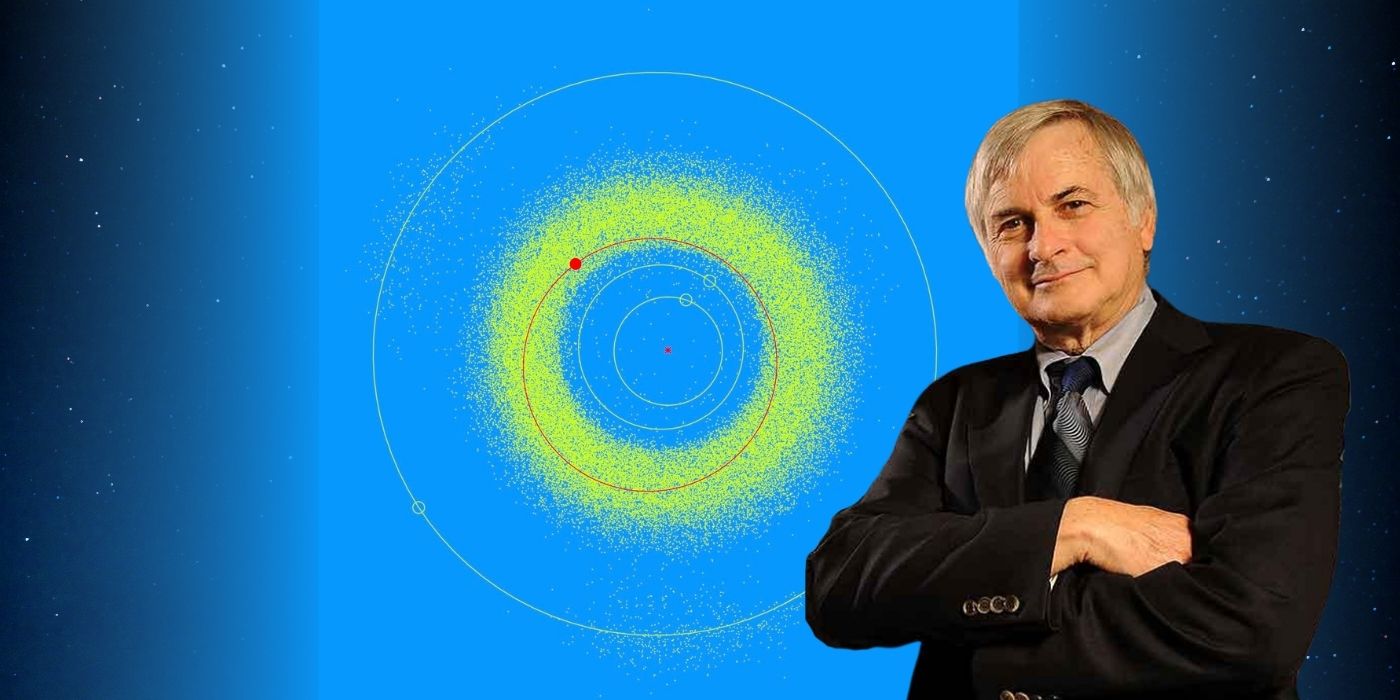
The International Astronomical Union (IAU) has officially named Asteroid 2006 BT282 as Asteroid Shostak, honoring Dr. Seth Shostak for his contributions to astronomy and science communication.
The official citation reads:
“Dr. Seth Shostak (b. 1943) is an American astronomer and Senior Scientist at the SETI Institute. He is recognized for his work using radio telescopes in the search for evidence for extraterrestrial life, and for his many decades of skillful and wide-ranging public outreach through books, articles, films, talks, media interviews, and his national radio program.”
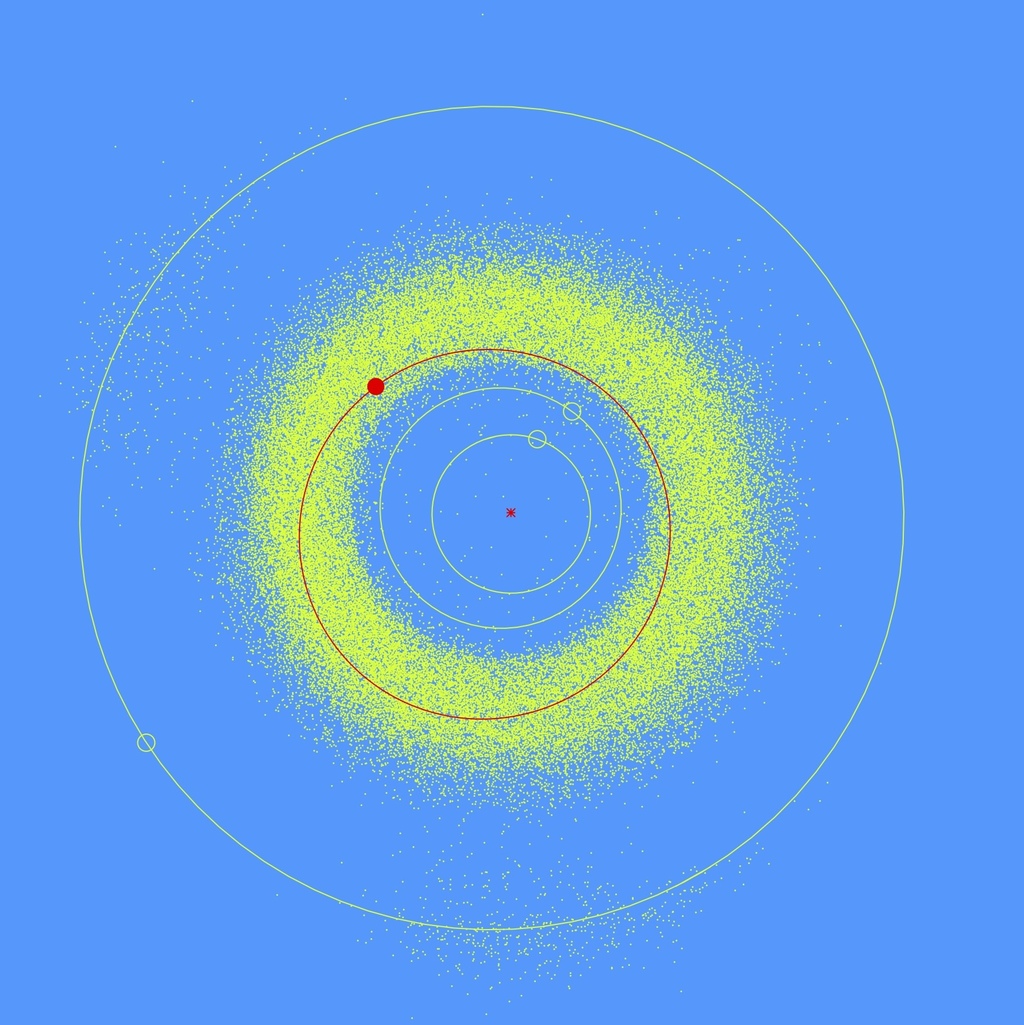
Asteroid Shostak resides in the main asteroid belt between Mars and Jupiter and completes an orbit around the Sun every 3.6 years.
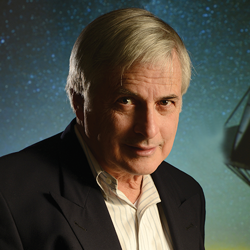
Dr. Shostak has spent more than four decades advancing the scientific search for extraterrestrial intelligence, with a particular focus on radio astronomy and observational strategies. He joined the SETI Institute in its early years and has been a leading voice in both its research and public engagement.
Co-hosting the nationally celebrated radio program Big Picture Science and authoring numerous influential books and textbooks, Dr. Shostak has reached audiences worldwide. His appearances in hundreds of documentaries, interviews, and radio programs have inspired curiosity and wonder, distilling the universe's story with clarity, humor, puns and an unwavering enthusiasm that sparks excitement in all who listen.
At "SethFest," a special event organized by the SETI Institute to celebrate Dr. Shostak’s decades-long impact on science and outreach, astronomer and educator Andrew Fraknoi reflected on Shostak’s impact:
“As Voltaire once wrote about another figure concerned with the heavens, if Seth Shostak did not exist, it would have been necessary to invent him. It’s impossible to imagine the last 40 years of SETI and science popularization without Seth. There’s his groundbreaking research in the SETI arena and his many published papers—but even more people know him through his and Molly’s national radio show, his countless media appearances, public lectures, and popular books. Above all, it’s his tireless willingness to explain our science clearly and credibly for reporters, educators, and the public that has made Seth an indispensable resource for the public understanding of science.”
A certificate detailing the asteroid’s orbital parameters was presented to Dr. Shostak during the event, which fittingly began, as Fraknoi quipped, “with a big bang.”
News
Related News
Researchers Propose Searching the Moon for Microscopic Technosignatures
New study outlines the first quantitative framework for searching lunar regolith for microscopic technosignatures. #Press Releases #Moon #Technosignatures #Lewis Pinault #Andrew Siemion #Astrobiology #SETI #Solar System #AI and Machine Learning #Bill Diamond
New Meteor Shower Identifies Asteroid as a Cloaked Comet
#Comets, Meteors, and Asteroids #CAMS #Peter Jenniskens
SETI Institute Achievements: Q2 2026 Activity Report
During the second quarter of 2026, the SETI Institute was especially active and made strong progress in research, education, outreach, and public engagement. Our scientists published over 80 peer-reviewed papers in fields such as SETI, astrobiology, planetary science, exoplanets, and heliophysics. #Activity Reports #Carl Sagan Center #Outreach #Education #AIR #Community #Research #SETI Institute
JWST Reveals a Race Against Time for Forming Planets
SETI Institute scientist Uma Gorti co-authors one of the largest JWST studies of how planet-forming disks lose their gas #Press Releases #JWST #Astronomy #Astrophysics #Uma Gorti
New study reveals how space rocks become meteorites
Analysis of the atmospheric passage of 75 meteorite falls identifies seven distinct processes as space rocks melt, fragment and slow before they fall as meteorites #Press Releases #Comets, Meteors, and Asteroids #Peter Jenniskens #Meteorites #Astronomy #Stuart Pilorz
Look Up: A Lunar Eclipse on August 27
#Eclipse #Community #Andrew FraknoiResearch
Related Projects
SkyMapper: Expanding Access to Real-time Astronomy Through a Global Astronomical Network
SkyMapper and the SETI Institute are connecting educators, students and the public to live astronomical observations through a distributed astronomical network. #SkyMapper #SETI #Citizen Science #Astronomy
Virtual Planetary Laboratory
How can we best assess whether an exoplanet supports life? #VPL
Discovery and Futures Lab
What happens if life beyond Earth is discovered? The Discovery and Futures Lab at the SETI Institute fosters novel and anticipatory research at the intersection of science, society, our planet, and the search for life beyond Earth. #Discovery and Futures LabSupport the
SETI Institute
Scientists are getting closer in their search for life beyond earth. But with limited federal funding for the search for extraterrestrial intelligence, supporters are the reason cutting-edge scientists can keep their eyes on the sky.