Hollywood Science
Franck Marchis and Bill Diamond appeared on Good Day LA to weigh in on the science accuracy for planetary protection in a popular new film.
Bill and Franck discuss the scientific merits of the new Netflix film "Don't Look Up" starring Leonardo DiCaprio and Jennifer Lawrence.
- SETI.org: Don’t Look Up | The Real-Life Heroes of Planetary Defense
- SETI.org: Movie Review: Don’t Look Up
Speaking of Asteroids…

Asteroid 1994 PC1 zipped past the Earth on January 18, 2022. While it didn’t make an impact (this time), observing scientists can gather information on its morphology.
"It's a rocky asteroid. It's not made of material that will be rare," [Franck] Marchis said. "It's kind of a boring asteroid."
Searching for Megastructures in the Universe
Radio signals and laser light are two possible indicators of alien intelligence. Another tool in the search that is being developed is finding evidence of alien megastructures.
“[It’s] essentially any artificial structure built by an intelligent civilization perhaps for energy harvesting purposes,” Ann Marie Cody, a researcher scientist at NASA Ames and the SETI Institute, told Vice in a fascinating new interview.
- Vice: How Scientists at the SETI Institute Look for Alien Life
- The-Byte: NASA Scientist Describes Hunt for Alien Megastructures
- TweakTown: NASA expert explains how the humans are hunting for alien buildings
- DNYUZ: How Scientists at the SETI Institute Look for Alien Life
- SETI Live: The Search for Technosignatures with TESS
Observing Laser Flashes Takes a Leap Forward

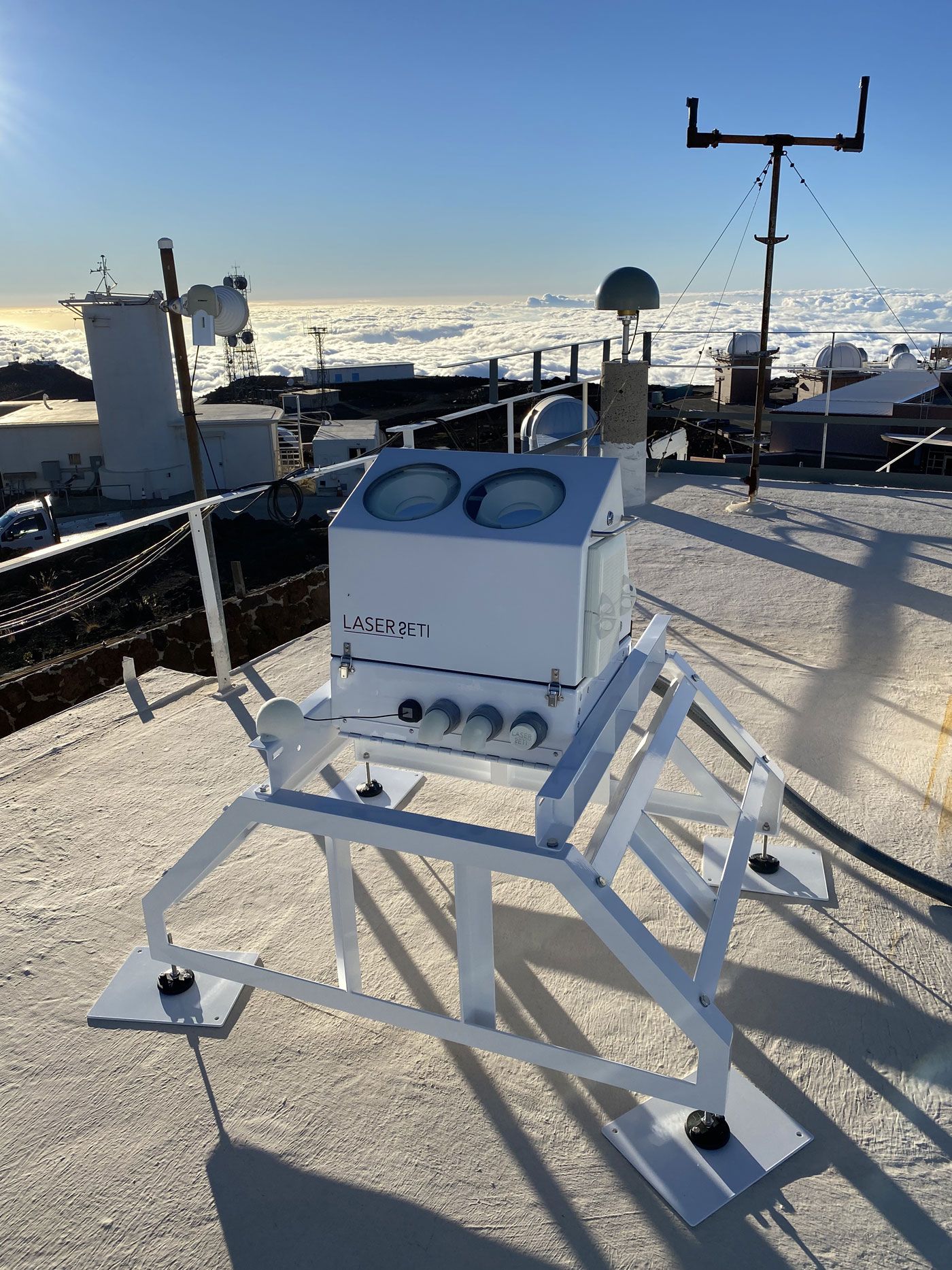
The search for signs of other intelligence in the universe was expanded with the installation of additional LaserSETI instruments in Hawai’i, allowing for almost full-sky observation. Eliot Gillum performed the installation in person.
The expanding laser system complements older forms of SETI that listen for radio broadcasts or scan distant planets for visual evidence of current or extinct civilizations. Practitioners of the different modes of SETI—radio, optical and laser—are all trying to make their sensors scan more of the sky for longer spans of time.
Red Dwarf(s)

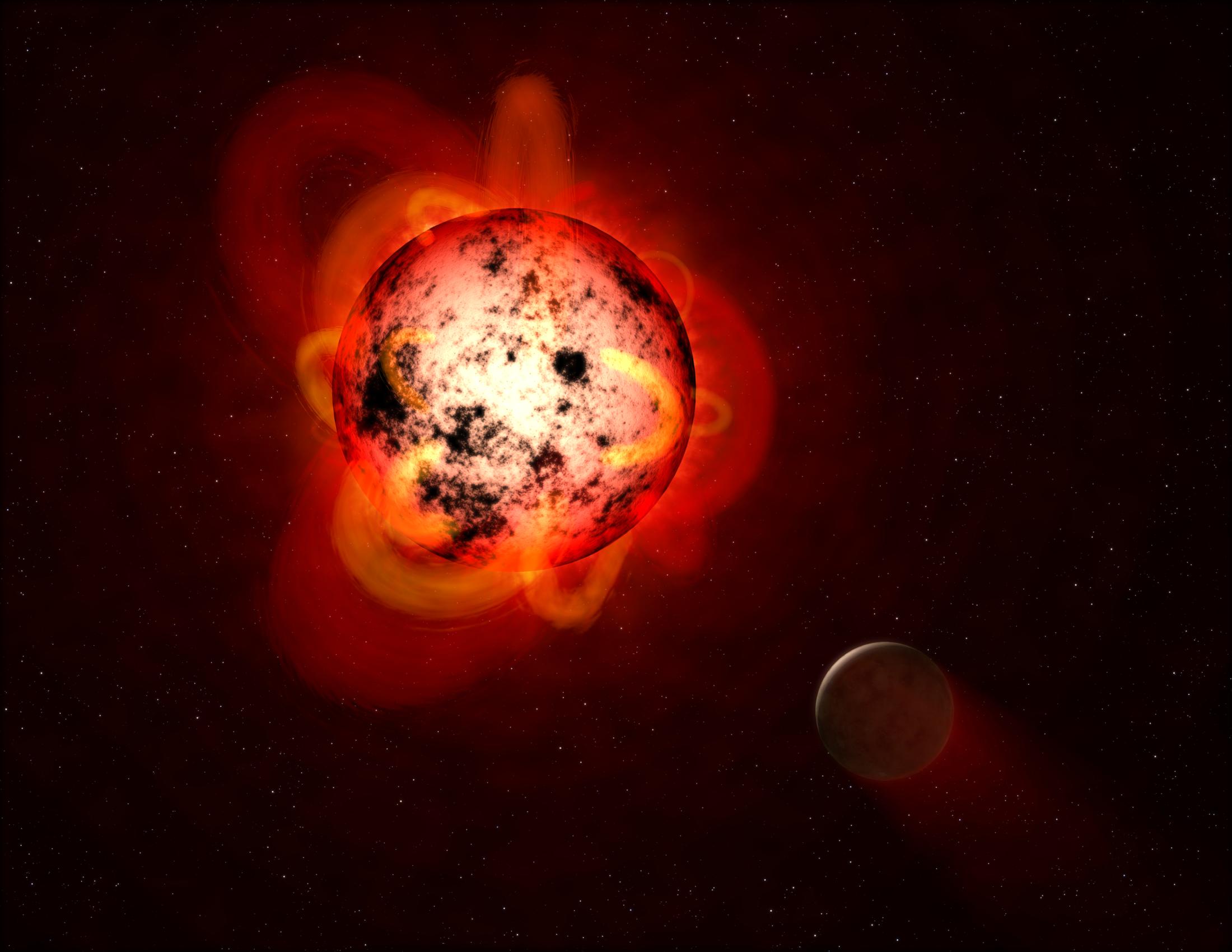
A new paper by UC Riverside astrophysicist Stephen Kane and his colleagues describes the evolution of the ‘habitable zone’ of a planet in relation to the host star’s evolution. This analysis had significant implications for the search for life outside of Earth. Red dwarfs, with their long lifespan, may be some of the best places to search.
“This paper’s interesting because they’re trying to study how a star behaves in the first tens of millions of years of its life. That would’ve been impossible to do when I was a graduate student,” [Seth] Shostak says. “Understanding how stars work tells you which stars to look at for signs of life and which exoplanets we should be excited about.”
Big Picture Science
Join hosts Seth Shostak and Molly Bentley each week as they explore emerging science and technology research.
What’s a Few Degrees?
Brace yourself for heatwave “Lucifer.” Dangerous deadly heatwaves may soon be so common that we give them names, just like hurricanes. This is one of the dramatic consequences of just a few degrees rise in average temperatures.
Also coming: Massive heat “blobs” that form in the oceans and damage marine life, and powerful windstorms called “derechos” pummeling the Midwest.
Plus, are fungal pathogens adapting to hotter temperatures and breaching the 98.6 F thermal barrier that keeps them from infecting us?
With guests Kathy Baughman McLeod, Pippa Moore, Ted Derouin, Jeff Dukes, Arturo Casadevall
Into the Deep
Have you ever heard worms arguing? Deep-sea scientists use hydrophones to eavesdrop on “mouth-fighting worms.” It’s one of the many ways scientists are trying to catalog the diversity of the deep oceans — estimated to be comparable to a rainforest.
But the clock is ticking. While vast expanses of the deep sea are still unexplored, mining companies are ready with dredging vehicles to strip mine the seafloor, potentially destroying rare and vulnerable ecosystems. Are we willing to eradicate an alien landscape that we haven’t yet visited?
With guests Craig McClain, Steve Haddock, Emily Hall, Chong Chen
More Big Picture Science episodes can be found at http://bigpicturescience.org/episodes.
SETI Live
SETI Institute hosts interview cutting-edge scientists each week on social media. Recent SETI Live episodes include:
Coming Soon: The Missions and Sights of 2022
Despite 2022 starting as an extension of 2020 and 2021, there are still new missions to be launched, more science to be done, and all the usual sights in the sky to look up at. Join Franck Marchis and Simon Steel as they give you the run down on what’s coming up in space science this year.
Videos of all past Facebook Live events can be found on our Facebook page, https://www.facebook.com/SETIInstitute/, or on our YouTube channel, https://www.youtube.com/SETIInstitute.
News
Related News
The SETI Institute and ETH Zurich join forces to search for the origin of life
ETH Zurich and the SETI Institute announced a strategic scientific partnership today. The US-based research organization will provide start-up funding for a new assistant professorship and associated research activities at ETH Zurich. #Press Releases #SETI Institute #Partnerships #ETH Zurich #Bill Diamond
SETI Institute Achievements: Q2 2026 Activity Report
During the second quarter of 2026, the SETI Institute was especially active and made strong progress in research, education, outreach, and public engagement. Our scientists published over 80 peer-reviewed papers in fields such as SETI, astrobiology, planetary science, exoplanets, and heliophysics. #Activity Reports #Carl Sagan Center #Outreach #Education #AIR #Community #Research #SETI Institute
Look Up: A Lunar Eclipse on August 27
#Eclipse #Community #Andrew Fraknoi
SETI Institute In the News: July Roundup 2026
#SETI Institute in the News #SETI Institute #Community #Peter Jenniskens #Lucian Walkowicz #Chelsea Haramia #Pascal Lee #Bill Diamond #Seth Shostak #Meteorites #SETI #UAPs #NASA Missions and Observatories #Discovery and Futures Lab #Mars
SETI Institute In the News: June Roundup 2026
Throughout June 2026, SETI Institute scientists, affiliates, and collaborators contributed to discussions spanning interstellar visitors, planetary science, technosignature searches, animal cognition, and the scientific process guiding the search for life beyond Earth. #SETI Institute in the News #SETI Institute #Community #Eduardo Bendek #Optical SETI #SETI #3I/ATLAS #ATA #Comets, Meteors, and Asteroids #Solar System #Franck Marchis #Ariel Graykowski #Jill Tarter #Vishal Gajjar #Radio Astronomy #Bill Diamond #Lori Marino
SETI Institute Achievements: Q1 2026 Activity Report
#Activity Reports #Carl Sagan Center #Outreach #Education #AIR #Community #Research #SETI InstituteResearch
Related Projects
SkyMapper: Expanding Access to Real-time Astronomy Through a Global Astronomical Network
SkyMapper and the SETI Institute are connecting educators, students and the public to live astronomical observations through a distributed astronomical network. #SkyMapper #SETI #Citizen Science #Astronomy
Virtual Planetary Laboratory
How can we best assess whether an exoplanet supports life? #VPL
Discovery and Futures Lab
What happens if life beyond Earth is discovered? The Discovery and Futures Lab at the SETI Institute fosters novel and anticipatory research at the intersection of science, society, our planet, and the search for life beyond Earth. #Discovery and Futures LabSupport the
SETI Institute
Scientists are getting closer in their search for life beyond earth. But with limited federal funding for the search for extraterrestrial intelligence, supporters are the reason cutting-edge scientists can keep their eyes on the sky.