By analyzing the oxygen content of ancient, iron-rich sedimentary rocks, scientists determined just how low oxygen levels were before life began to flourish.
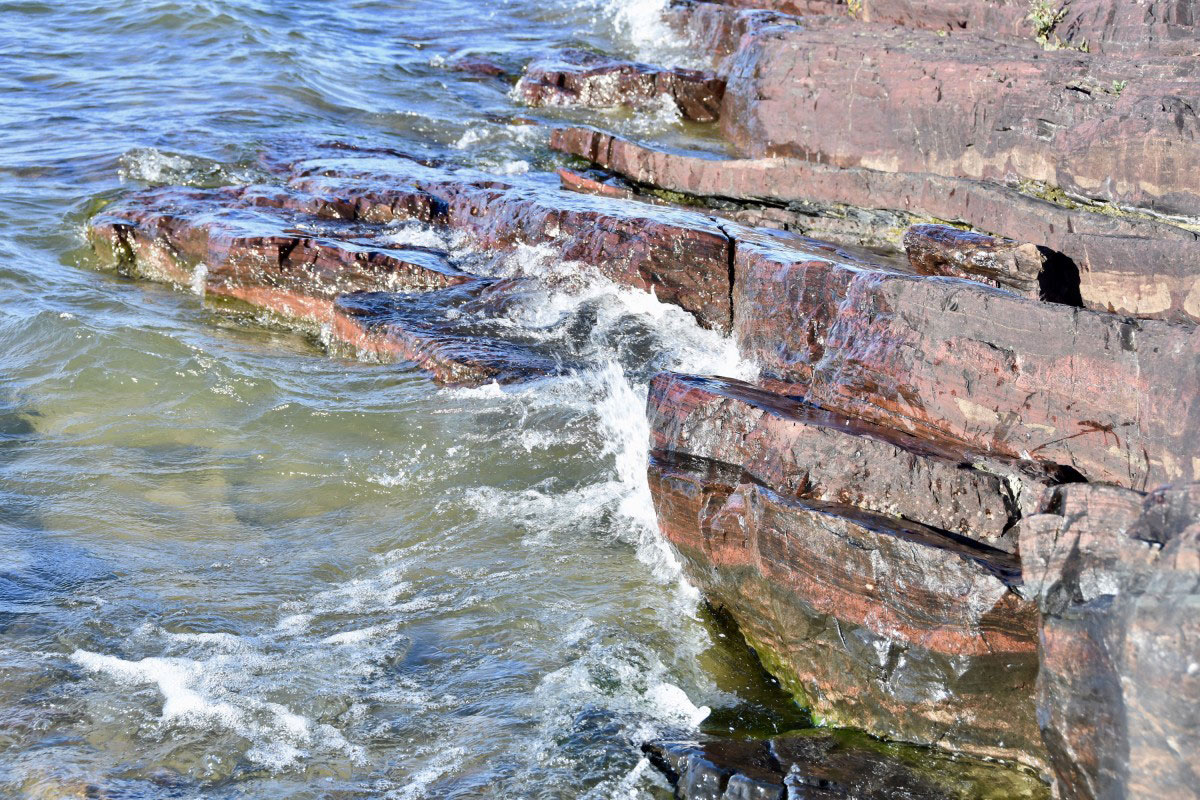
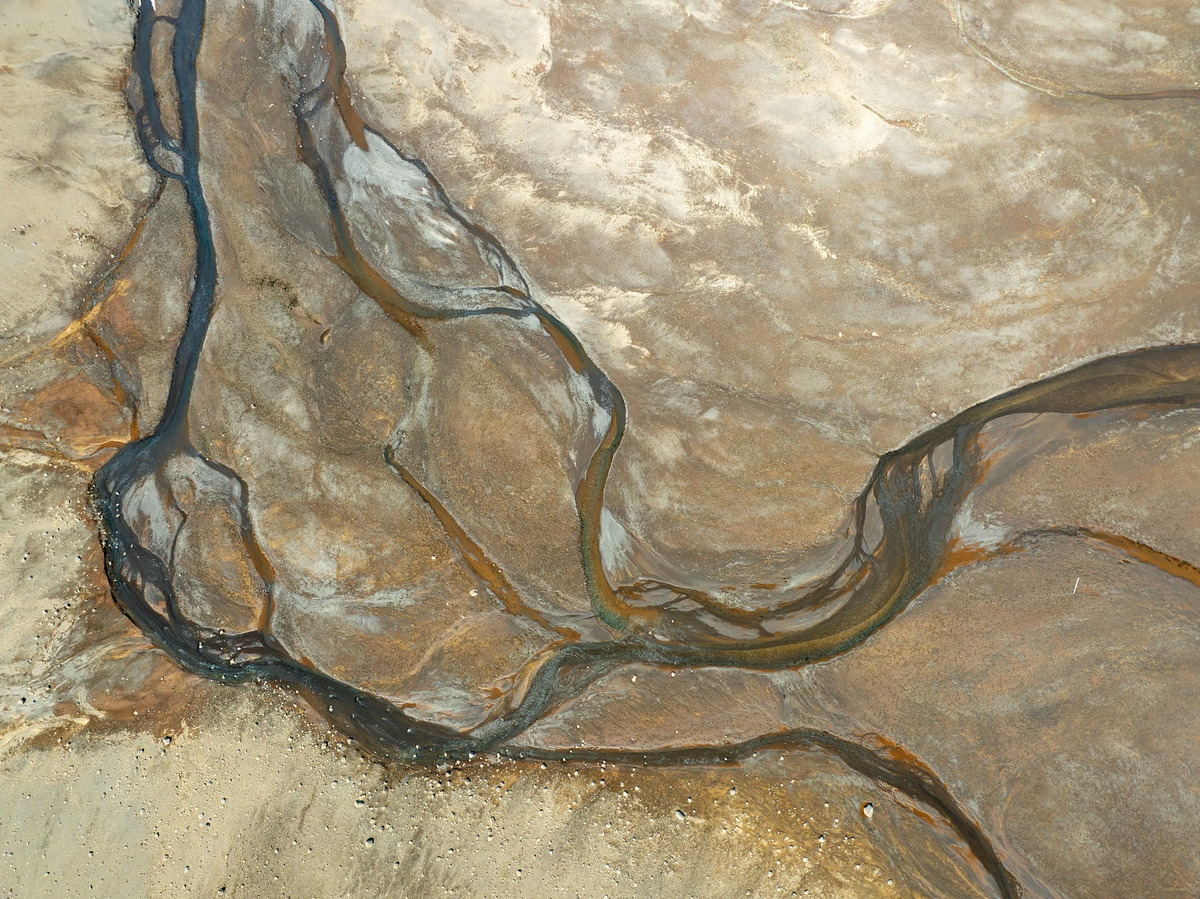
IMAGE: Ironstones deposited on the seafloor nearly two billion years ago now occur as rocky outcrops along the lakeshore of Tu Nedhé (Northwest Territories, Canada). CREDIT: Devon Cole
By Beth Johnson
A lot of times in science, to understand where you are and what will be, you have to look back at where you came from. In the search for life beyond Earth, with our sample size of just one, we are compelled to understand everything we can about how life came about here on our pale blue dot. That way we have some idea of what to look for on other worlds.
It’s not a simple process. Earth, so far, has proven to be unique, and we’re not 100% certain just what ingredients were needed to allow life to not only develop but flourish. There are thousands upon thousands of known exoplanets out there, but we haven’t found that perfect Earth 2.0 that will give us a possible sample size of, well, two.
So we look back into Earth’s past to try and understand how life arose and maybe find a clue for something we can find elsewhere that will tell us, “Yes, that planet has life.”
In new research published in the Proceedings of the National Academy of Sciences, scientists analyzed the oxygen content of iron-rich sedimentary rocks from around the world, trying to understand what Earth was like in the distant past and what changes came about that we can maybe measure in an atmosphere elsewhere. Co-author Maxwell Lechte explains: Until now, there was a critical gap in our understanding of environmental drivers in early evolution. The early Earth was marked by low levels of oxygen, till surface oxygen levels rose to be sufficient for animal life. But projections for when this rise occurred varied by over a billion years — possibly even well before animals had evolved.
And that’s where the rocks come in. These iron-rich sedimentary rocks, or ironstones, provided the researchers with a way to determine the amount of oxygen present when the rocks formed. The results were intriguing, as lead author Changle Wang goes on to explain: These ironstones offer insights into the oxygen levels of shallow marine environments, where life was evolving. The ancient ironstone record indicates around less than 1% of modern oxygen levels, which would have had an immense impact on ecological complexity.
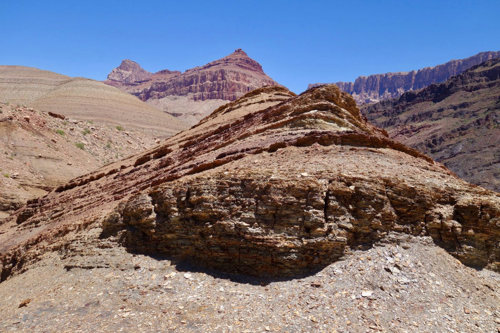
IMAGE: Ironstones within the sedimentary rock layers of the Grand Canyon (Arizona, USA), preserving clues about ancient marine environments. CREDIT: Susannah Porter
And Lechte continues: These low oxygen conditions persisted until about 800 million years ago, right when we first start to see evidence of the rise of complex ecosystems in the rock record. So if complex eukaryotes were around before then, their habitats would have been restricted by low oxygen.
So how did Earth’s oxygen levels increase dramatically enough to harbor larger and larger lifeforms? That rise is called the Great Oxidation Event, and it is thought to have been caused by cyanobacteria producing oxygen through photosynthesis. Of course, oxygen is toxic to life, so that same rise of oxygen probably caused a mass extinction event. No, really. Oxygen is toxic. That’s why we need antioxidants. It’s slowly killing us.
Biology is bizarre. I much prefer rocks.
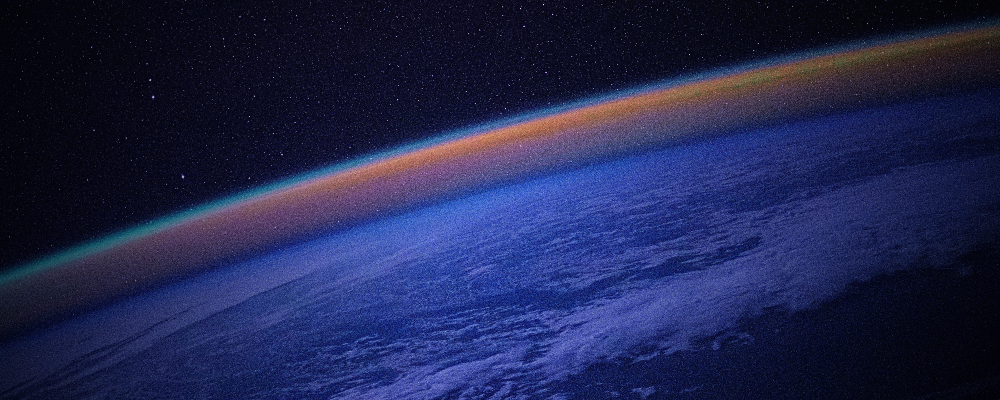
Now all of this leads us to the search for life beyond Earth because oxygen can be detected in an atmosphere from space. Our sample size of one may just be enough, if we understand it, to point to ozone as a biosignature in another atmosphere. Another co-author, Noah Planavsky, notes: Ozone strongly absorbs ultraviolet light, making ozone detection possible even at low atmospheric oxygen levels. This work stresses that ultraviolet detection in space-based telescopes will significantly increase our chances of finding likely signs of life on planets outside our solar system.
And that’s where that new, shiny, golden telescope comes into play. One of its goals is to look at exoplanetary atmospheres, which we can then analyze and use to hunt for possible biosignatures, like ozone. I, for one, am looking forward to all that research.
New study outlines the first quantitative framework for searching lunar regolith for microscopic technosignatures.
#Press Releases
#Moon
#Technosignatures
#Lewis Pinault
#Andrew Siemion
#Astrobiology
#SETI
#Solar System
#AI and Machine Learning
#Bill Diamond
Six international artists shortlisted for a new residency at the intersection of art, astrobiology, and biotechnology
#AIR
#SETI Institute
#Speculative Life
#Astrobiology
#Danielle Siembieda
#Nathalie Cabrol
SkyMapper and the SETI Institute are connecting educators, students and the public to live astronomical observations through a distributed astronomical network.
#SkyMapper
#SETI
#Citizen Science
#Astronomy
What happens if life beyond Earth is discovered? The Discovery and Futures Lab at the SETI Institute fosters novel and anticipatory research at the intersection of science, society, our planet, and the search for life beyond Earth.
#Discovery and Futures Lab
SkyMapper and the SETI Institute are connecting educators, students and the public to live astronomical observations through a distributed astronomical network.
What happens if life beyond Earth is discovered? The Discovery and Futures Lab at the SETI Institute fosters novel and anticipatory research at the intersection of science, society, our planet, and the search for life beyond Earth.
Scientists are getting closer in their search for life beyond earth. But with limited federal funding for the search for extraterrestrial intelligence, supporters are the reason cutting-edge scientists can keep their eyes on the sky.
)