)

Thursday, Jan 06, 2022
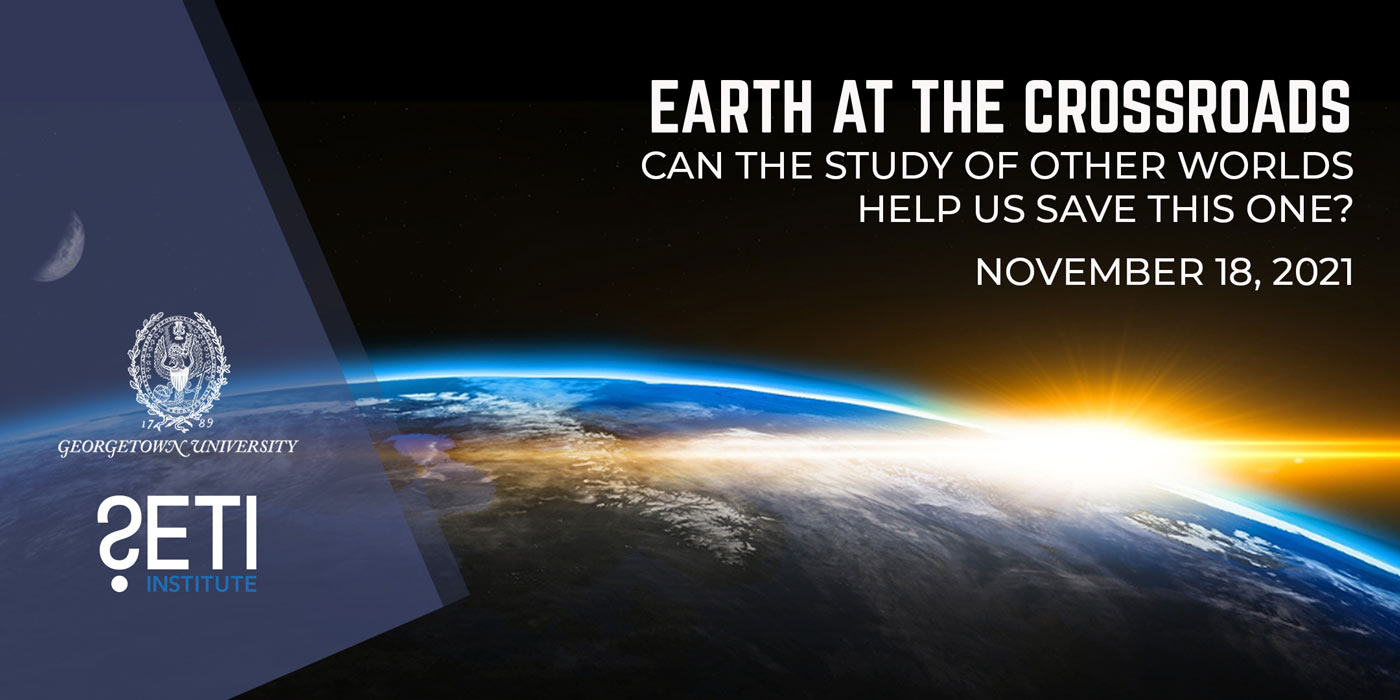
Tantalizing new discoveries suggest that we are probably not alone in the universe. And yet, as Enrico Fermi said in 1950: where is everybody? Are habitable worlds rare, unlikely, and therefore cosmically precious? Or is life easily overwhelmed by changing planetary conditions? Do technological societies in particular face an inevitable “Great Filter” that causes their extinction? These questions link the search for extraterrestrial life to the urgent environmental challenges facing our own civilization, from deadly pandemics to human-caused climate change. On November 18th, 2021, Georgetown University and the SETI Institute united scholars, journalists, artists and activists in conversations to explore what the search for alien life may reveal about the future of life on Earth. These conversations were open to Georgetown students and were livestreamed to the general public. They culminated in a closed-session roundtable discussion consisting of the program panelists, intended to draft a proclamation on the state of Earth’s environment and its future potential in a cosmic context.
The five panels at the November event introduced audience members to the ‘L’ variable of the Drake equation and its relevance to questions about humanity’s impact on Earth’s climate and its long term implications for our survival as a technological civilization. Subsequent panels explored the topic of ‘habitability’ in the context of the search for life beyond Earth and its relevance to understanding life on our own planet. Habitability was discussed in the context of life on Earth, habitability in the Solar System, and the habitability of exoplanets or planets orbiting distant stars. Each panel discussion was recorded as a separate session and they are available for viewing in the links below.
- Introduction
- A Planetary Perspective: Meet the L Variable
- Habitability at Home
- Habitability in the Solar System
- Habitability Beyond
- Habitability at Home Redux
The event also included a Georgetown University Student panel on Planetary Protection, a presentation of topical artistic programs from the artists of the Institute’s Artist-in-Residence program, and a workshop on the Library of the Great Silence.
Videos of each of these program events can be found here:
- Planetary Protection: A Student Perspective
- SETI Artist-in-Residence Program Performance
- Library of the Great Silence Workshop
Short Videos:
List of all Panelists:
- Ross Andersen, Deputy Editor, The Atlantic
- John Brooke, Ohio State University
- Morgan Cable, NASA Jet Propulsion Laboratory
- Nathalie Cabrol, SETI Institute
- Ann Marie Cody, SETI Institute
- Alfred Darlington (a.k.a. Daedalus), SETI Institute Artists-In-Residence (AIR) Program
- Dagomar Degroot, Georgetown University
- Bill Diamond, President and CEO, SETI Institute
- Nadia Drake, Science Journalist, Contributor to National Geographic
- Bettina Forget, Director, SETI Institute Artists-In-Residence (AIR) Program
- Abigail Fraeman, NASA Jet Propulsion Laboratory
- David Grinspoon, Planetary Science Institute
- Alison Gorman, Flinders University
- Victoria Herrmann, The Arctic Institute
- Jordan Holmes (a.k.a. Dxtr Spits), SETI Institute Artists-In-Residence (AIR) Program
- Chris House, Penn State
- Sarah Johnson, Georgetown University
- Jonathon Keats, SETI Institute Artists-In-Residence (AIR) Program
- Kennda Lynch, Lunar and Planetary Institute
- Felipe Perez Santiago, SETI Institute Artists-In-Residence (AIR) Program
- Sofia Sheikh, Breakthrough Listen
- Ellen Stofan, Smithsonian Institution
- Jill Tarter, SETI Institute
- Paul Voosen, Science Journalist, Science
- Sara Walker, Arizona State University
- Michael Wall, Science Journalist, Space.com
- Michael Wong, Carnegie Institution for Science
- Alexandra Witze, Science Journalist, Contributor to Nature and Science
Student panel – planetary protection:
- Owen Chbani, Student, Georgetown University
- Zach John, Student, Georgetown University
- Mia Kuchner, Student, Georgetown University
- Clara Ma, Student, Georgetown University
Videos:
Introduction to the 2021 conference hosted by the SETI Institute and Georgetown University.
Bill Diamond, Dagomar Degroot, Sarah Johnson, and Jonathon Keats
A Planetary Perspective: Meet the L Variable
Moderator: Nadia Drake, Science Journalist, Contributor to National Geographic
Panelists: Michael Wong, Ann Marie Cody, and Nathalie Cabrol
Habitability at Home
Moderator: Paul Voosen, Science Journalist, Science
Panelists: Ellen Stofan, Chris House, and John Brooke
Habitability in the Solar System
Moderator: Michael Wall, Science Journalist, Space.com
Panelists: Kennda Lynch, Abigail Fraeman, and Morgan Cable
Habitability Beyond
Moderator: Ross Andersen, Deputy Editor, The Atlantic
Panelists: Sofia Sheikh, Sara Walker, and Jill Tarter
Habitability at Home Redux
Moderator: Alexandra Witze, Science Journalist, Contributor to Nature and Science
Panelists: Alice Gorman, David Grinspoon and Victoria Herrmann
Planetary Protection: A Student Perspective
Moderator: Clara Ma
Panelists: Mia Kuchner, Owen Chbani, and Zach John
SETI Artist-in-Residence Program Performance
Presenter: Bettina Forget, Director, SETI Institute Artists-In-Residence (AIR) Program
Performers: Jordan Holmes (a.k.a. Dxtr Spits), Felipe Perez Santiago, and Alfred Darlington (a.k.a. Daedalus)
Library of the Great Silence Workshop
Facilitator: Jonathon Keats, SETI Institute Artists-In-Residence (AIR) Program
Habitability Beyond
Seth Shostak
Habitability In The Solar System
Nathalie Cabrol
Meet The L Variable
Nadia Drake
Habitability At Home
Jill Tarter
Habitability At Home Redux
Dava Sobel







News
Related News
Aug 18, 2026
SETI AIR Newsletter - August 2026
#AIR #SETI AIR Newsletter #Bettina Forget #Andrea Rassell #Alicia Sometimes #Jonathon Keats #Daniela de Paulis #Laurent Grasso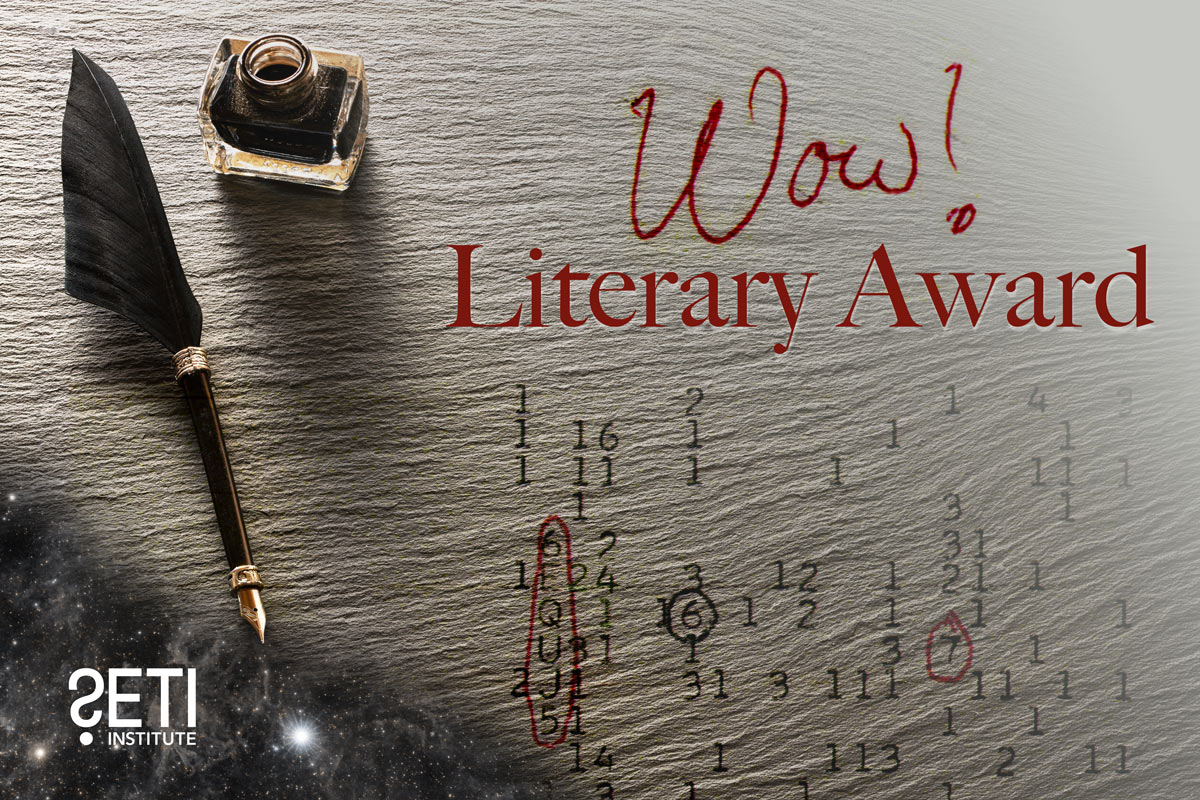
Jul 22, 2026
The SETI Institute is now accepting submissions for the Wow! Literary Award for Emerging Writers
The annual Wow! Literary Award for emerging writers and poets (formerly Cosmic Chronicles Literary Prize) is a contest for emerging writers of all ages whose work explores questions of interspecies communication, intelligence and consciousness in the universe. #AIR #Cosmic Chronicles #Wow! Literary Award #Bettina Forget #Gregory Betts
Jul 22, 2026
SETI AIR Newsletter - July 2026
#AIR #SETI AIR Newsletter #Bettina Forget #Xin Liu #Jonathon Keats #Richelle Ellis #Linda O'Keefe
Jul 21, 2026
Celebrating 25 Years of Exoplanet Astrobiology: Welcoming the Virtual Planetary Laboratory to its New Home at the SETI Institute
#VPL #Astrobiology #SETI Institute #Victoria Meadows #Andrew Lincowski #Eric Wolf #Nicholas Wogan #Kimberly Bott #Hannah Dawson
Jun 24, 2026
SETI AIR Newsletter - June 2026
#AIR #SETI AIR Newsletter #Bettina Forget #Daniela Brill Estrada #Bart Kuipers #Julie-Michèle Morin #Xin Liu #Richelle Ellis #Jonathon Keats #Scott Kildall #Daniela de Paulis
Jun 1, 2026
SETI Institute Awards $1 Million in STRIDE Grants to Advance Astrobiology, Exoplanet Science, and Public Engagement
#Press Releases #STRIDE #Research #Carl Sagan Center #Spectroscopy #Solar System #SETI #Climate and Bioscience #Astronomy #Astrobiology #Exoplanets #Data Science #Education #Outreach #Hat Creek Radio Observatory #Unistellar #SkyMapper
Aug 18, 2026
#AIR
#SETI AIR Newsletter
#Bettina Forget
#Andrea Rassell
#Alicia Sometimes
#Jonathon Keats
#Daniela de Paulis
#Laurent Grasso
Jul 22, 2026
The SETI Institute is now accepting submissions for the Wow! Literary Award for Emerging Writers
The annual Wow! Literary Award for emerging writers and poets (formerly Cosmic Chronicles Literary Prize) is a contest for emerging writers of all ages whose work explores questions of interspecies communication, intelligence and consciousness in the universe.
#AIR
#Cosmic Chronicles
#Wow! Literary Award
#Bettina Forget
#Gregory Betts
Jul 22, 2026
#AIR
#SETI AIR Newsletter
#Bettina Forget
#Xin Liu
#Jonathon Keats
#Richelle Ellis
#Linda O'Keefe
SETI AIR Newsletter - July 2026
Jul 21, 2026
#VPL
#Astrobiology
#SETI Institute
#Victoria Meadows
#Andrew Lincowski
#Eric Wolf
#Nicholas Wogan
#Kimberly Bott
#Hannah Dawson
Celebrating 25 Years of Exoplanet Astrobiology: Welcoming the Virtual Planetary Laboratory to its New Home at the SETI Institute
Jun 24, 2026
#AIR
#SETI AIR Newsletter
#Bettina Forget
#Daniela Brill Estrada
#Bart Kuipers
#Julie-Michèle Morin
#Xin Liu
#Richelle Ellis
#Jonathon Keats
#Scott Kildall
#Daniela de Paulis
SETI AIR Newsletter - June 2026
Jun 1, 2026
#Press Releases
#STRIDE
#Research
#Carl Sagan Center
#Spectroscopy
#Solar System
#SETI
#Climate and Bioscience
#Astronomy
#Astrobiology
#Exoplanets
#Data Science
#Education
#Outreach
#Hat Creek Radio Observatory
#Unistellar
#SkyMapper
SETI Institute Awards $1 Million in STRIDE Grants to Advance Astrobiology, Exoplanet Science, and Public Engagement
Research
Related Projects

SkyMapper • SETI • Citizen Science • Astronomy
SkyMapper: Expanding Access to Real-time Astronomy Through a Global Astronomical Network
SkyMapper and the SETI Institute are connecting educators, students and the public to live astronomical observations through a distributed astronomical network. #SkyMapper #SETI #Citizen Science #Astronomy
VPL
Virtual Planetary Laboratory
How can we best assess whether an exoplanet supports life? #VPL
Discovery and Futures Lab
Discovery and Futures Lab
What happens if life beyond Earth is discovered? The Discovery and Futures Lab at the SETI Institute fosters novel and anticipatory research at the intersection of science, society, our planet, and the search for life beyond Earth. #Discovery and Futures Lab
May 17, 2026
SkyMapper: Expanding Access to Real-time Astronomy Through a Global Astronomical Network
SkyMapper and the SETI Institute are connecting educators, students and the public to live astronomical observations through a distributed astronomical network.
#SkyMapper
#SETI
#Citizen Science
#Astronomy
May 5, 2026
Virtual Planetary Laboratory
How can we best assess whether an exoplanet supports life?
#VPL
Apr 16, 2026
Discovery and Futures Lab
What happens if life beyond Earth is discovered? The Discovery and Futures Lab at the SETI Institute fosters novel and anticipatory research at the intersection of science, society, our planet, and the search for life beyond Earth.
#Discovery and Futures Lab
Support Us
Support the
SETI Institute
Scientists are getting closer in their search for life beyond earth. But with limited federal funding for the search for extraterrestrial intelligence, supporters are the reason cutting-edge scientists can keep their eyes on the sky.