)

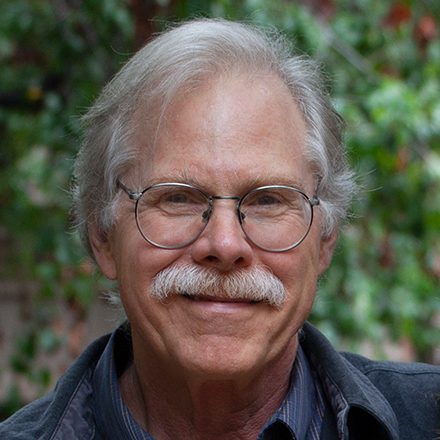
Jeff Cuzzi
Senior Research Scientist
Degree/Major: BS, Engineering Physics, Cornell, 1967; MS, PhD Planetary Science, Caltech, 1969, 1972
Role: Scientist
Biography
Dr. Jeff Cuzzi is a planetary scientist who has studied planetary rings for over 50 years - since the only planetary ring was Saturn’s. His early training as a radio astronomer led to his initial interest in Saturn’s rings (and to some early SETI observations). At that time, we knew practically nothing about the rings, besides their water ice rich composition. Jeff advanced our understanding of the particle sizes, composition, and dynamics in Saturn’s rings, and was invited to join the Voyager Imaging Team to lead ring observation planning for both Saturn encounters. He continued in this role for Voyager 2’s Uranus and Neptune encounters, broadening our understanding to these ring systems which are different in nearly every way. He served on the Science Definition team for what became the Cassini-Huygens mission and was selected as the Interdisciplinary Scientist for Rings and Dust. A theme emerged in “comparative ring-ology” during the Voyager era, and become even more strongly supported after Cassini, that Saturn’s distinctive icy rings may be much younger than Saturn itself.
As Voyager wound down, Jeff initiated a second research theme – particle-gas dynamics in the early solar nebula – to understand the formation of the first planetesimals (asteroids, comets, TNOs). In a series of studies ranging over 30 years, he and his colleagues explored a planetesimal formation pathway in which freely-floating, cm-size “pebbles” such as seen in radio astronomical observations of disks, and in primitive meteorites, are significantly concentrated by turbulence into large dense clumps that shrink under their own self-gravity into the first 10-100km diameter planetesimals. This “turbulent concentration” pathway is appealing if the gas in circumstellar disks of pebbles is moderately turbulent, because the more familiar “streaming instability” pathway is obstructed by turbulence. Jeff continues to work actively in this latter area with colleagues at SETI, Ames, and elsewhere.