The idea of math and science had always made me nervous. I didn't enjoy the lectures on weather and dissections, and learning math scared me. I never thought I could excel in these subjects, but I knew I was fascinated with space.
In my sophomore year of high school, I took the first science class that truly interested me: astronomy. My teacher, Jeff Adkins from Deer Valley High School (Antioch, CA), was exceptional at teaching and instilling a curiosity for the universe I had never felt before. He ended up being a catalyst for all my future projects.
With this new sense of fascination, I applied to volunteer at Chabot Space and Science Center. There, I explained all the branches of science to visitors and children, but I also joined the astronomy club. In the club, we learned astronomy topics and stargazed. We had the unique opportunity of working with Daniel Peluso, who was then a researcher at the SETI Institute and a Ph.D. candidate at the University of Southern Queensland. He came to meet the club and explained that we would be working with Unistellar eVscopes to observe the transit of an exoplanet, which is when the planet passes in front of its host star. The observation was the final phase of his Ph.D., and the club would take on the important role of gathering data to contribute towards his paper, which we would be co-authors of.
During the night of research, our team worked with Daniel and Dr. Ian Weaver of the SETI Institute to observe the transit. We assisted in discovering and characterizing the exoplanet TIC 139270665 b, and the team published the work in the Astronomical Journal. Daniel's Ph.D. thesis was accepted, so the data from our observations helped with a published paper on a newly discovered exoplanet and contributed to Daniel getting his Ph.D.
After the exoplanet observation experience, I asked lots of questions, including how to become more involved with research through Unistellar. I was accepted as an intern for Unistellar, which launched me into STEM endeavors. As a Unistellar intern, Drs. Daniel Peluso and Ian Weaver mentored me, helping me access an eVscope and advising me on my projects. I went into my senior year with one goal: to compete in the county science fair. I was scared to do it throughout most of high school, but with the proper guidance from the SETI Institute, I finally felt ready.
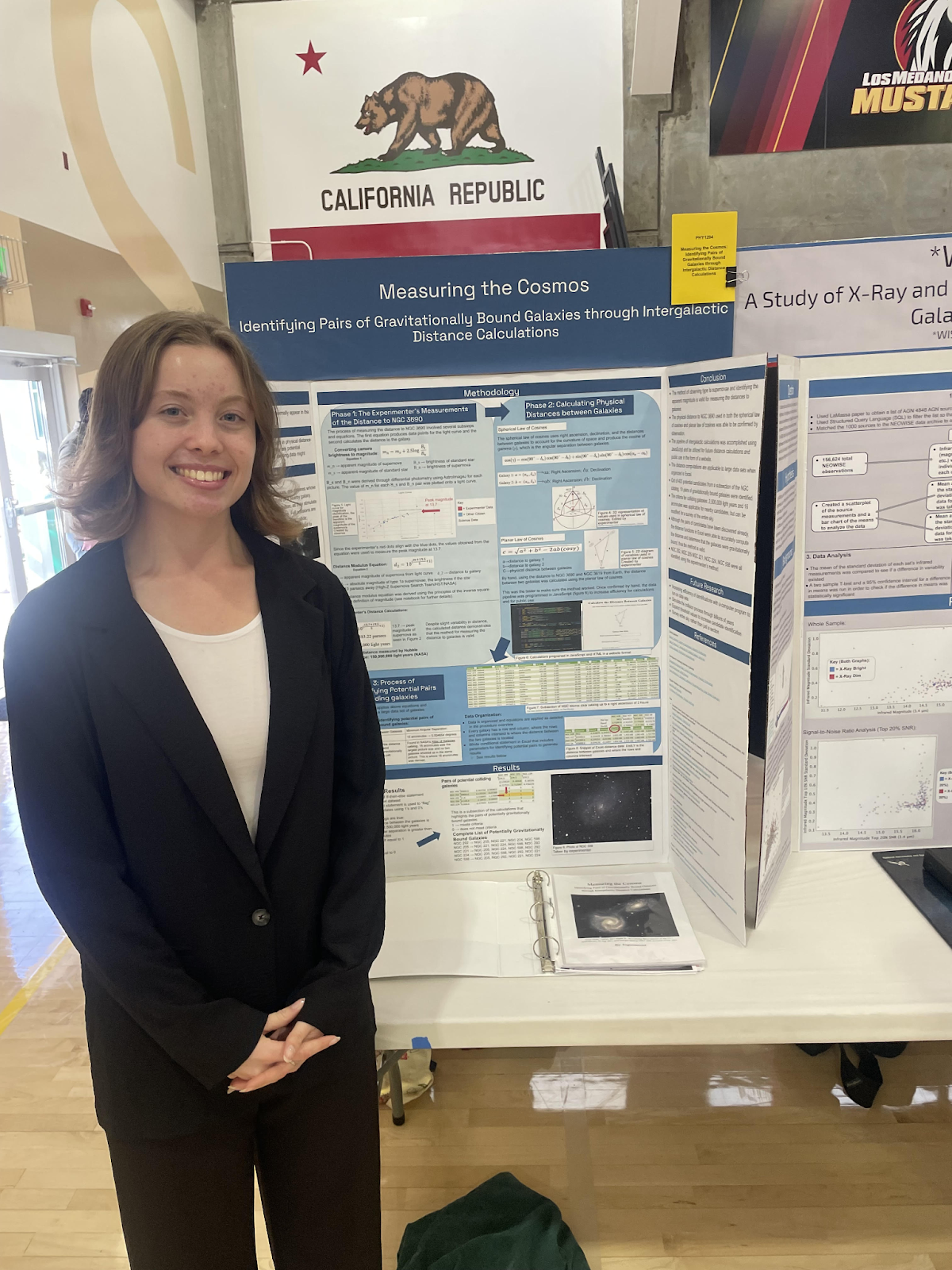
I used Unistellar Citizen Science data of a Type Ia supernova (a white dwarf's explosive death), provided by Dr. Tom Esposito (SETI Institute), to construct a light curve and measure the distance to the host galaxy in my project. This process led me to create my own JavaScript program for calculating the distances between galaxies, culminating in my own method of identifying pairs of gravitationally bound galaxies that did not appear in the same photo. I titled it: "Measuring the Cosmos: Identifying Pairs of Gravitationally Bound Galaxies through Intergalactic Distance Calculations." I won second place in the fair and had the opportunity to present it numerous times throughout the last half of my senior year.
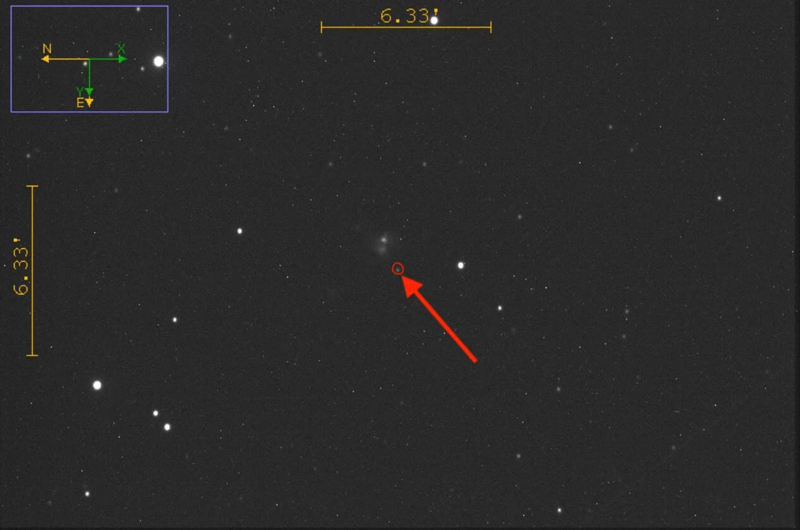
Picture of supernova (circled in red) taken using the Las Cumbres Observatory (LCO)
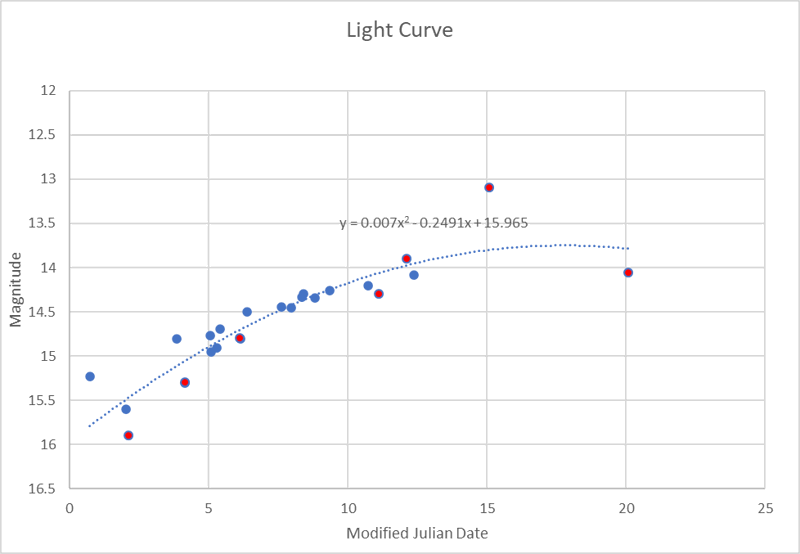
The plot depicts the data points for the light curve of the supernova (shown above). The blue line is a trendline fitted to better model the curve and observe the maximum magnitude.
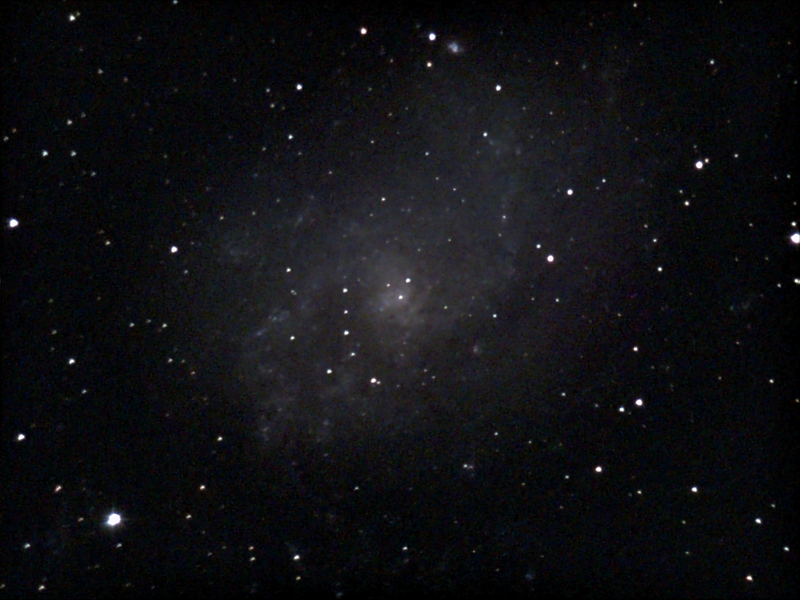
Picture of NGC 598, taken with eVscope One of the galaxies classified as colliding by using the program
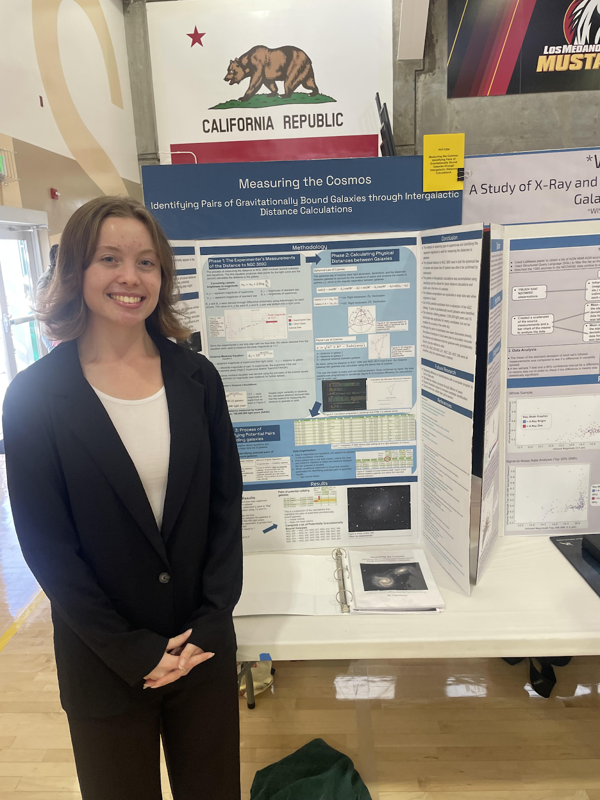
Presenting at Contra Costa Science Fair, March 2024
Due to my STEM experiences in high school, I felt excited to apply as an intended physics major at the University of California (UC). I applied to five of the seven campuses and received acceptance to all of them. Inspired by my newfound passion for science, I am now an incoming freshman at the University of California, Berkeley.
My worries and fears about pursuing math and science have diminished because I have been lucky to experience research through my own projects and through the SETI Institute. I have persevered through my mental blocks and found opportunities to explore my passion. This summer, I was able to intern at NASA Ames Research Center and engaged in engineering and spacecraft research, specifically working with data from the BioSentinel CubeSat.
Although I was afraid in the beginning, with the help of the SETI Institute team, my astronomy teacher, Jeff Adkins, and my deep-rooted passion for space and science, I achieved things I never thought possible. After my schooling, I hope to go into industry and put my education into practice. I’m excited for a future filled with STEM.
Hanna Johnson was a volunteer during her junior year of high school and an intern during her senior year at Chabot Space and Science Center in Oakland, CA. She is now pursuing degrees in physics and data science at the University of California, Berkeley.
)